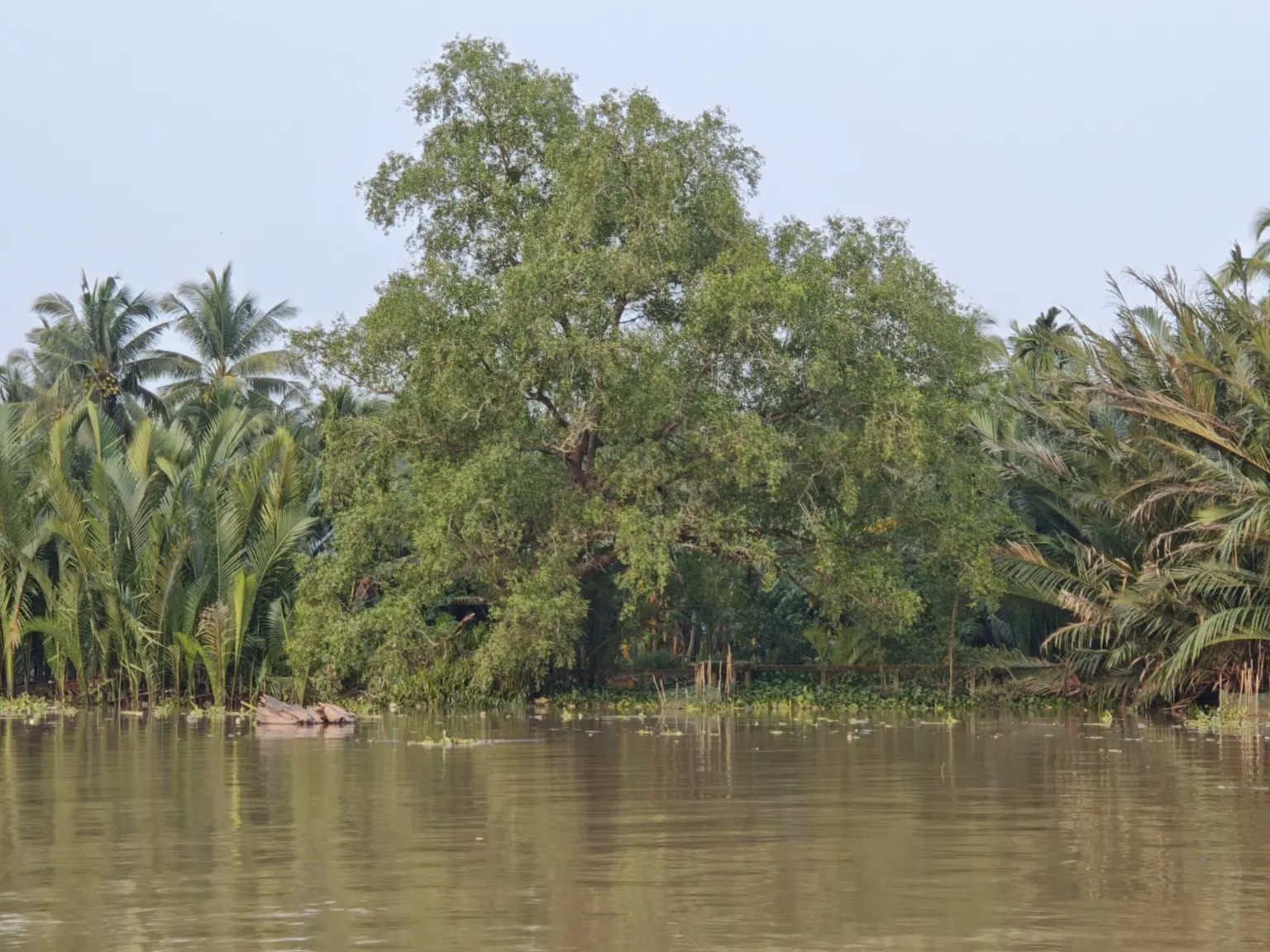
What is a bần tree?
Sonneratia caseolaris is an accepted botanical species native across tropical Asia and into the southwest Pacific and northern Australia. Kew describes it as a wet-tropical tree; botanical research places it among pioneering mangrove-associated trees able to occur across freshwater and saline conditions.
S7Royal Botanic Gardens, Kew — Sonneratia caseolarisAccepted plant name, distribution and wet-tropical biome context.
S8Tatongjai et al. (2021) — Comparative anatomy and salt management of SonneratiaBotanical context for S. caseolaris as a mangrove pioneer tolerant of freshwater and saltwater settings.
Why firefly literature mentions Sonneratia
Similar associations have been documented elsewhere in Southeast Asia, but dependence on bần has not been established in Ben Tre.
S4Lewis et al. (2024) — Illuminating firefly diversity: trends, threats and conservationGlobal review of diversity and pressures, including light pollution and habitat change.
S5Dawood & Saikim (2016) — Studies on congregating fireflies in SabahRegional context for Pteroptyx and mangrove-associated displays in Malaysia only.
S6Jaikla et al. (2020) — Distribution and habitat characteristics of Pteroptyx firefliesThailand habitat study; regional comparison, not local identification.
What is observed in Ben Tre
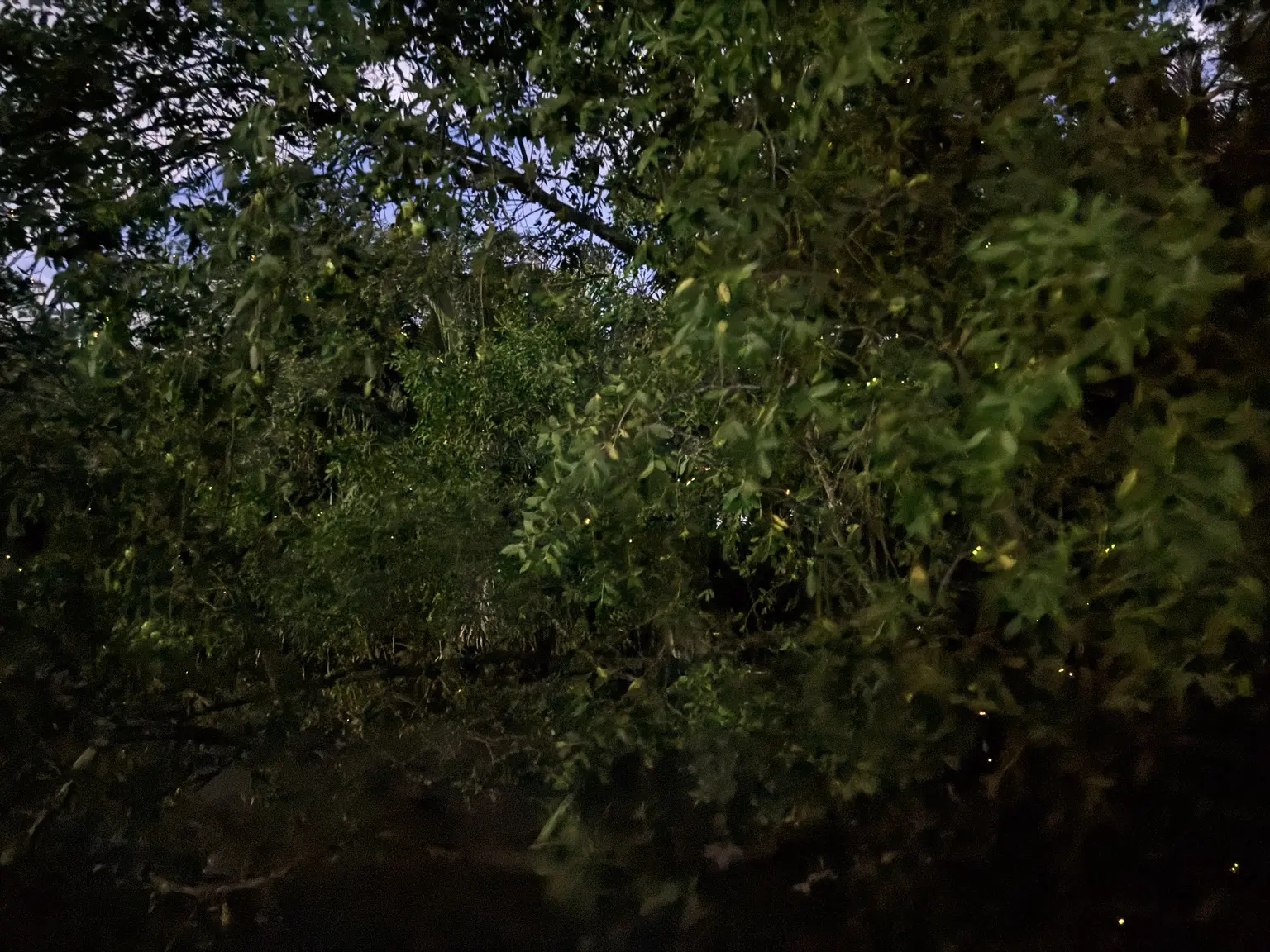
Thuần recorded fireflies on nearly every locally identified bần tree along the observed river stretch. Species and cause remain unknown.
Read the original Vietnamese note and English translation →Do display trees change?
What we will not claim
- “Ben Tre fireflies depend on bần trees.”
- “The local species is Pteroptyx tener.”
- “One exceptional night proves a population increase.”