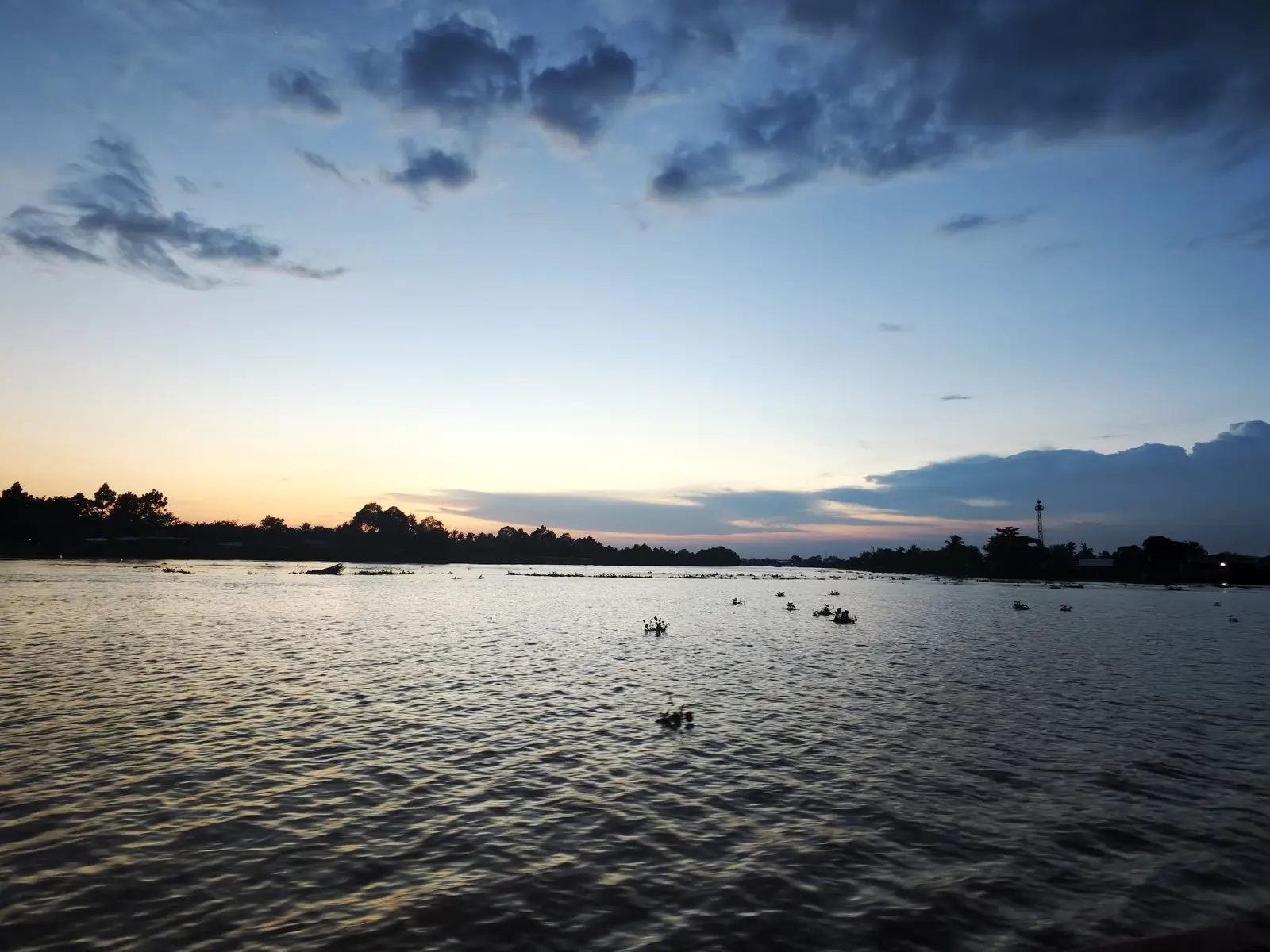
Keep the night dark
Turn off flash
Camera illumination and artificial light can interfere with firefly signalling in studied species. A brighter photo is not worth adding disturbance.
Dim screens and torches
Use the minimum light required for safety, pointed away from display vegetation. Give eyes time to adapt.
Do not catch or touch
Never collect fireflies or pull branches closer. Do not enter or cut vegetation for a view.
Approach slowly
Limit wake, repeated repositioning and contact with the bank. A hand-rowed sampan can reduce engine noise in suitable narrow waterways, but no boat type is automatically impact-free.
Respect river communities
Keep voices and music low, avoid shining light into homes, and follow local navigation and safety instructions.
What research supports
S1Owens & Lewis (2018) — The impact of artificial light at night on nocturnal insectsBroad scientific context for artificial light impacts; not Ben Tre-specific.
S2Owens et al. (2018) — Artificial light influences firefly flash behaviourExperimental evidence that light can alter flash communication in studied fireflies.
S3Owens et al. (2022) — Artificial light impacts mate success of female firefliesSpecies-specific experimental evidence; mechanism is not assumed for Ben Tre.
S4Lewis et al. (2024) — Illuminating firefly diversity: trends, threats and conservationGlobal review of diversity and pressures, including light pollution and habitat change.
S9IUCN SSC Firefly Specialist Group report (2022)Conservation-planning context for congregating mangrove fireflies and sustainable tourism guidance.
A practical local example
Coco Happy Farm, a contributor to this project, operates a paid evening experience that uses small-group river travel, a hand-rowed segment and guidance to keep flash and bright lights off near displays. These are practical low-impact principles; the experience is not claimed to be scientifically certified as sustainable.
Commercial disclosure and practical details ↗